
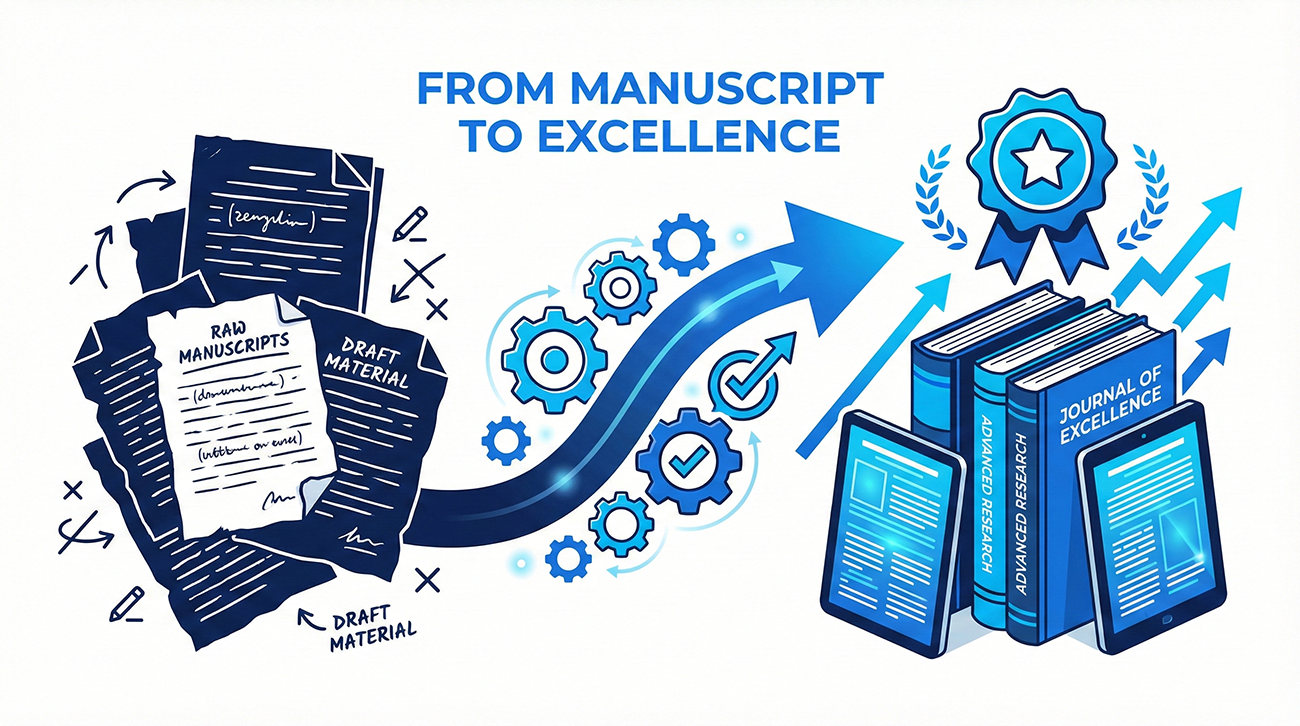
Every publisher begins with a vision. Perhaps it is the desire to advance scientific understanding by disseminating groundbreaking research. Maybe it is the commitment to preserving cultural heritage through carefully curated scholarly works. It could be the ambition to establish a new voice in academic discourse, bringing fresh perspectives to established fields. Whatever the driving force, the path from vision to impact requires more than good intentions. It demands expertise, precision, and partnership with professionals who understand both the technical demands and the transformative potential of scholarly publishing.
The journey towards publication excellence is rarely straightforward. Publishers navigate complex technical requirements, manage demanding timelines, coordinate with diverse stakeholders, and maintain rigorous quality standards whilst operating within realistic budgets. Each decision along this path affects not only the immediate publication but also the publisher’s reputation, author relationships, and long-term viability. The challenge is not simply producing publications but creating work that commands respect, reaches intended audiences, and generates genuine impact within scholarly communities.
This is where strategic academic publishing services become transformative rather than merely transactional. The right partnership does not just handle production tasks. It elevates your entire publishing programme, turning operational challenges into opportunities for excellence and enabling you to focus on what matters most: advancing knowledge and serving your scholarly community with distinction.
From Vision to Reality: The Foundation of Impactful Publishing
Outstanding publications begin long before manuscripts reach production teams. They emerge from clear vision about what you want to achieve and whom you aim to serve. A medical publisher might envision becoming the trusted source for emerging research in personalised medicine. A university press could aspire to be recognised for exceptionally beautiful and accessible humanities scholarship. A learned society may seek to expand their journal’s influence within an international research community. These visions provide direction, but realising them requires translating aspiration into concrete operational excellence.
The foundation for this transformation lies in understanding that every element of the publication process contributes to impact. Content structure affects discoverability. Visual presentation influences reader engagement. Metadata quality determines whether research reaches the right audiences. Accessibility features expand readership and fulfil ethical obligations. Production speed affects your ability to publish timely research ahead of competitors. Quality consistency builds author confidence and reader trust. When these elements align through expertly designed workflows and meticulous execution, individual publications become part of a larger narrative of excellence.
Professional content production services bring systematic rigour to this alignment. Rather than treating each publication as an isolated task, experienced partners help establish coherent standards, efficient workflows, and quality benchmarks that elevate everything you produce. This systematic approach creates the consistency that distinguishes respected publishers from those perceived as merely adequate. Over time, this consistency becomes reputation, and reputation becomes influence within your scholarly community.
Building Momentum Through Strategic Partnership
Publishers often reach inflection points where growth ambitions strain existing capabilities. Perhaps manuscript submissions are increasing faster than internal teams can process them. Maybe you are launching new journals or book series that require additional production capacity. You might be expanding into new geographical markets or subject areas that demand different expertise. These moments present both opportunity and risk. Handle them well, and you accelerate towards your goals. Manage them poorly, and quality suffers, authors grow frustrated, and momentum stalls.
Strategic partnerships with specialist academic publishing services provide the scalability that growth demands without the overhead and risk of rapidly expanding internal operations. Experienced partners bring established infrastructure, proven workflows, and flexible capacity that adapts to your publishing volume. When manuscript flow increases, they scale resources accordingly. When you launch new initiatives, they provide specialist expertise your permanent team may lack. This flexibility enables ambitious growth whilst maintaining the quality standards that protect your reputation.
Beyond simple capacity, strategic partners contribute expertise that accelerates your journey towards excellence. They bring knowledge of emerging best practices across the scholarly publishing landscape, insight into technical innovations that could benefit your programme, and experience with challenges you have not yet encountered but likely will. This knowledge transfer strengthens your entire organisation, making your internal team more capable even as external partners handle production execution. The relationship becomes genuinely collaborative rather than merely delegative.
Trust forms the cornerstone of productive partnerships. Publishers need confidence that their content will be handled with appropriate care, that deadlines will be met reliably, and that quality will remain consistent across all projects. Building this trust requires transparency about processes, proactive communication about progress and challenges, and demonstrated commitment to your success rather than simply completing contracted tasks. When trust exists, partnerships become extensions of your own team, working towards shared goals with aligned incentives and mutual respect.
Elevating Quality Across Every Dimension
Publication excellence manifests across multiple dimensions simultaneously. Technical precision ensures that references link correctly, figures display properly, and metadata integrates seamlessly with discovery platforms. Aesthetic quality creates publications that readers find inviting and professional. Accessibility ensures that content reaches all potential audiences regardless of disability. Speed to publication keeps research timely and competitive. Each dimension requires dedicated attention and specialist expertise to execute well.
Comprehensive content production services address these dimensions systematically rather than treating them as separate concerns. XML conversion is performed with attention to semantic structure that supports both current output needs and future content reuse. Copyediting goes beyond grammar to ensure clarity and consistency that enhances reader comprehension. Figure preparation considers both print reproduction and screen display across devices. Metadata creation follows established schemas whilst incorporating discipline-specific conventions. This holistic approach produces publications that excel across all quality dimensions simultaneously.
Quality assurance processes provide the verification that transforms careful work into reliable results. Automated validation catches technical errors that human review might miss. Expert checking confirms that specialist terminology is used correctly and that complex content like mathematical notation renders accurately. Reference verification ensures citation integrity. Accessibility testing confirms compliance with established standards. These layered quality controls create confidence that every publication meets rigorous standards before reaching readers.
Continuous improvement systems ensure that quality advances over time rather than remaining static. When production partners track metrics, analyse error patterns, and implement refinements based on data, quality steadily improves even as efficiency increases. This commitment to evolution means that your publications benefit from accumulated learning across hundreds or thousands of projects, with each success informing better practices that elevate subsequent work.
Technology as Enabler of Excellence
Modern publishing technology offers remarkable capabilities for those who deploy it strategically. XML-first workflows enable efficient multi-format delivery whilst preserving content structure for long-term reuse. Digital asset management systems organise figures, supplementary materials, and multimedia content for efficient access and reuse. Metadata platforms ensure discoverability through search engines and academic databases. Production tracking systems provide transparency about progress and enable proactive issue resolution. These technologies transform what is possible in scholarly publishing when implemented thoughtfully.
However, technology alone does not guarantee excellence. The critical factor is how technology integrates with human expertise to create workflows that leverage the strengths of both. Automation handles repetitive tasks that benefit from consistency and speed. Human judgement addresses nuanced decisions requiring subject knowledge or contextual understanding. Sophisticated academic publishing services have refined this integration through years of practice, knowing precisely where technology adds value and where human expertise remains essential.
Access to advanced publishing technology through service partnerships provides capabilities that would require substantial investment to develop internally. Rather than purchasing expensive software licences, maintaining technical infrastructure, and training staff on complex systems, publishers gain access to mature platforms and expert operators through service relationships. This approach allows smaller publishers to compete on quality with much larger organisations, democratising access to production excellence.
Emerging technologies present both opportunities and challenges for publishers. Artificial intelligence tools, enhanced accessibility platforms, and innovative content delivery mechanisms all promise improvements but require careful evaluation and implementation. Experienced production partners serve as guides through this technological landscape, helping publishers identify which innovations merit investment and which represent premature or overhyped solutions. This guidance protects against expensive missteps whilst ensuring publishers benefit from genuine advances.
Why Siliconchips Services Empowers Your Publishing Vision
Siliconchips Services exists to help publishers realise their highest ambitions. We understand that behind every manuscript lies someone’s intellectual contribution, months or years of research effort, and aspirations for impact within their scholarly community. We approach each project with the care and expertise these aspirations deserve, treating your content as the valuable intellectual property it represents.
Our comprehensive academic publishing services cover the full spectrum of production needs, from initial manuscript assessment through final publication delivery. We handle XML conversion with semantic precision, copyediting that enhances clarity, figure preparation that ensures visual excellence, metadata creation that maximises discoverability, and quality assurance that guarantees accuracy. This end-to-end capability means you work with a single trusted partner rather than coordinating multiple vendors.
We have invested decades in developing expertise across STM and humanities publishing, understanding the distinct requirements of different disciplines and content types. Our teams include specialists with subject knowledge in key academic fields, enabling them to handle technical terminology appropriately and recognise context-dependent accuracy issues. This domain expertise elevates our work beyond mechanical production to genuinely informed content handling.
Technology infrastructure at Siliconchips Services reflects our commitment to production excellence. We employ industry-leading platforms for XML processing, professional design software for figure work, and sophisticated quality management systems that ensure nothing falls through gaps. These tools are operated by skilled professionals who understand both technical capabilities and scholarly publishing requirements, creating the combination of advanced technology and expert judgement that produces outstanding results.
Transparency and partnership define how we work with clients. We provide clear timelines based on realistic assessment of complexity, communicate proactively about progress and any challenges, and welcome your input throughout production. We measure our success not by tasks completed but by your satisfaction and the quality of publications we help you create. Your goals become our goals, and we invest ourselves in helping you achieve the impact you envision.
Empower Your Publishing Journey Today
The path to publication excellence requires vision, commitment, and the right partnerships to transform aspiration into achievement. Every decision you make about production processes, quality standards, and service partners shapes the publications that carry your name and represent your values within scholarly communities. These decisions ultimately determine whether your publishing programme achieves the impact you envision or falls short of its potential.
Siliconchips Services offers the expertise, technology, and dedicated partnership that empowers publishers to reach their highest aspirations. Our content production services provide the foundation for excellence across every publication you create, enabling you to focus on editorial vision, author relationships, and strategic development whilst we handle production with precision and care.
If you are ready to elevate your publishing programme, to transform good publications into exceptional ones, and to build the reputation for quality that distinguishes respected publishers within your field, we invite you to begin a conversation about partnership. Contact Siliconchips Services today to discuss how our academic publishing services can empower your journey towards the publication excellence you envision. Together, we can create work that advances knowledge, serves scholarly communities, and achieves the lasting impact that defines meaningful publishing.
Frequently Asked Questions
What distinguishes excellent academic publishing services from adequate ones?
Excellent academic publishing services go beyond mechanical task completion to understand the scholarly context and impact goals behind each publication. They combine technical precision with subject matter expertise, ensuring content is not merely processed but handled with appropriate care for discipline-specific conventions. Superior services provide comprehensive quality assurance that catches errors before publication, transparent communication throughout production, and continuous improvement systems that elevate quality over time. They function as strategic partners invested in your success rather than simply vendors completing contracted work. The distinction manifests in fewer errors, faster turnarounds, better author experiences, and publications that enhance rather than merely maintain your reputation.
How can publishers evaluate whether content production services align with their quality standards and values?
Effective evaluation begins with requesting detailed information about quality assurance processes, including both automated validation and human review procedures. Ask for portfolio examples demonstrating work with content similar to yours in complexity and subject matter. Request references from publishers with comparable quality expectations whom you can contact directly. Discuss specific technical requirements and assess whether responses demonstrate genuine expertise or superficial familiarity. Strong partners will ask probing questions about your particular needs rather than offering generic solutions. They should articulate clear processes for handling corrections, managing revisions, and ensuring consistency across projects. Transparency about capabilities, limitations, and pricing structures indicates integrity that typically extends to all aspects of service delivery.
What role does technology play in achieving publication excellence through service partnerships?
Technology enables the efficiency, consistency, and quality that define excellent production services. XML-first workflows allow semantic content structure that supports multiple output formats whilst preserving long-term reusability. Automated validation tools catch technical errors more reliably than manual checking alone. Digital asset management systems organise complex materials efficiently. However, technology creates value primarily when integrated thoughtfully with human expertise. The most effective content production services use technology to handle tasks requiring speed and consistency whilst applying human judgement to decisions requiring subject knowledge or contextual understanding. This integration produces results superior to either technology or human effort alone, delivering both efficiency and quality simultaneously.
How do academic publishing services help smaller publishers compete with larger organisations?
Service partnerships provide smaller publishers with access to capabilities that would require substantial investment to develop internally. They gain the benefit of sophisticated production technology, specialist expertise across disciplines, and scalable capacity without the overhead costs of permanent infrastructure and staff. This levels the competitive landscape, allowing smaller publishers to produce work meeting the same quality standards as much larger organisations. Services also provide flexibility that benefits smaller publishers particularly, scaling resources up during busy periods and down during quieter times without the complications of hiring and reducing permanent staff. Strategic partnerships essentially allow smaller publishers to operate with the production capabilities of organisations many times their size.
What should publishers expect during the transition to working with new content production services?
Professional services manage transitions systematically to minimise disruption and establish productive working relationships. Expect an initial period focused on understanding your specific requirements, quality standards, style preferences, and workflow needs. Strong partners invest time in this discovery phase rather than rushing into production. You should receive detailed documentation of agreed processes, clear timelines for different publication types, and designated contacts for questions and issue resolution. Initial projects often receive enhanced oversight to ensure mutual understanding and identify any needed adjustments. Expect transparency about what is working well and where refinements might benefit outcomes. The transition period typically spans several projects as both parties learn to work together effectively. Patient, communicative partners who prioritise getting things right over moving quickly tend to establish the strongest long-term relationships.
How do content production services contribute to a publisher’s strategic goals beyond immediate production needs?
Strategic service partners contribute insights that inform broader publishing decisions. Their experience across multiple publishers and content types provides perspective on emerging trends, evolving best practices, and potential opportunities you might not have considered. They can advise on technical capabilities that could enhance your programme, alert you to changing standards or requirements affecting your field, and suggest process improvements that increase efficiency or quality. Strong partners become trusted advisers who understand your goals and proactively identify ways their expertise can support your strategic development. This consultative dimension transforms the relationship from transactional service provision to genuine partnership that strengthens your entire organisation over time.